

Stonking Stingray Is Here: Ubuntu 26.10 Brings Local AI Dictation and RISC-V Desktop Support
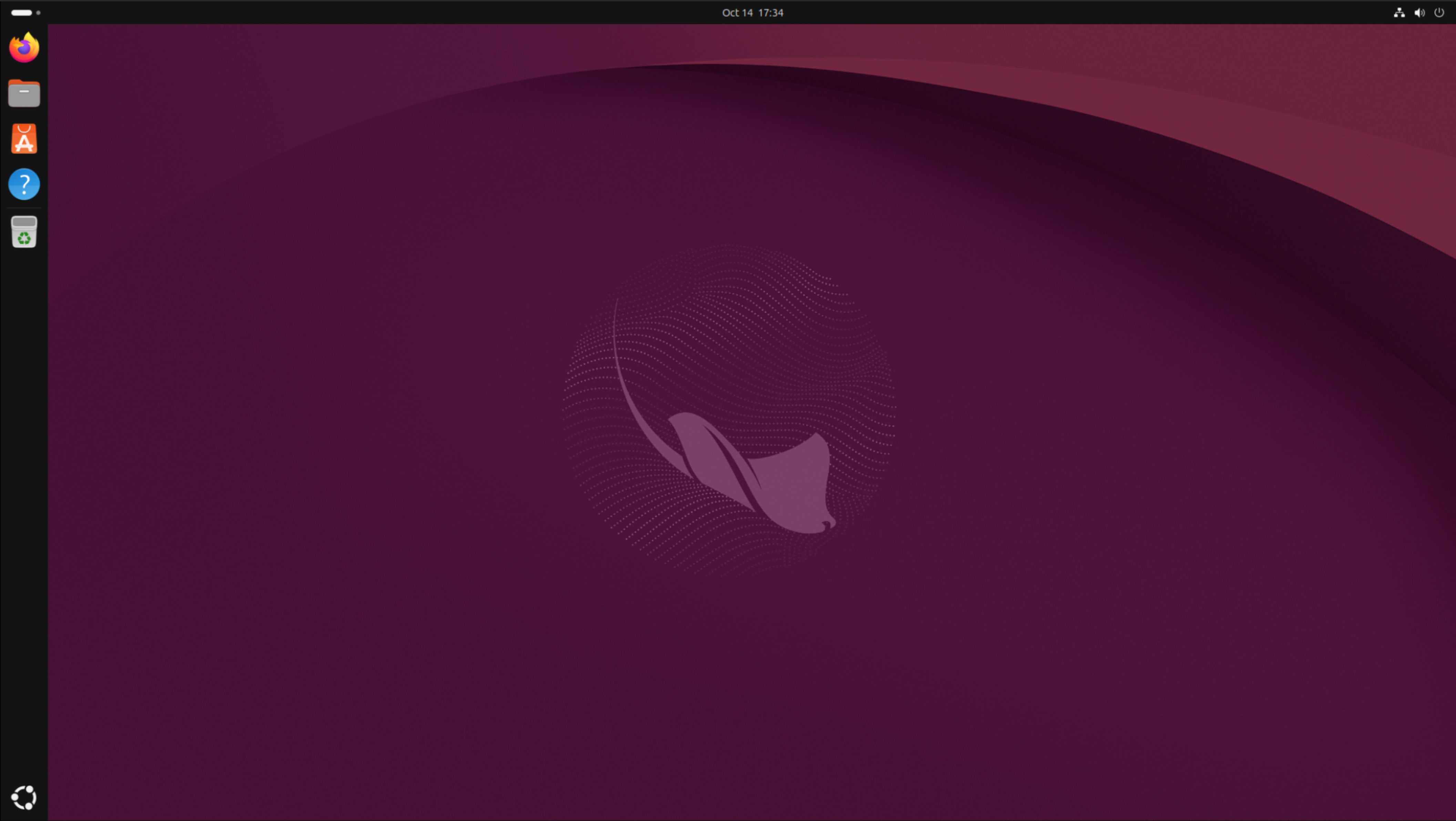 Canonical announced the release of Ubuntu 26.10, codenamed "Stonking Stingray," today. The interim release follows 26.04 LTS "Resolute Raccoon" and is available to download and install for free. It is a preview release (nine months of standard support) rather than an LTS, and Canonical frames it as the place where Ubuntu tests the next generation of features: Myna speech-to-text, post-quantum package signing, the completed Rust coreutils rollout, and stronger Microsoft Entra ID integration. The full release notes are at Canonical's release announcement.
What's new in Stonking Stingray
Ubuntu 26.10 ships with GNOME 51, which Canonical describes as a smoother, more responsive desktop with better display handling, improved accessibility, and refinements across core applications. The Ubuntu App Center also provides a more consistent experience for managing snaps and debs. Assistive technology users get improved support for Flutter applications, with screen readers like Orca now able to better parse Flutter app content.
Under the hood, the release adopts dbus-broker as the default D-Bus implementation, replacing legacy message queuing with strict per-app message accounting so a single app can't stall the desktop, and it tunes desktop OOM scoring to manage memory pressure better in userspace. For security, Ubuntu Desktop integrates more naturally with Microsoft identity services, including password sign-in with MFA and passwordless authentication, and TPM-backed full-disk encryption, which arrived in 26.04 LTS, now extends to hardware models lacking a Hardware Root of Trust, with an optional PIN or passphrase.
Two security items point further ahead. Ubuntu 26.10 replaces GnuPG with Sequoia PGP to verify APT repository signatures, bringing Rust's memory-safe practices to package signing as a step toward post-quantum readiness. It also introduces quantum-safe token support via openCryptoki, with PKCS #11 V3.2 coverage across Soft, EP11, and CCA tokens using ML-DSA and ML-KEM. The release also completes the migration to the Rust-based uutils coreutils, so the everyday command-line tools (cp, ls, grep, and friends) are now fully Rust on Ubuntu.
Myna: private, local speech-to-text
The headline feature is the debut of Myna, Ubuntu's speech-to-text agent, named after the speech-mimicking myna bird. Myna is an opt-in feature in 26.10 that runs on local, on-device models, so dictation happens on your hardware without sacrificing privacy, with clear visual feedback while you speak. It was released as a technology preview the day before the OS itself, and you can try it on current Ubuntu Desktop builds at the Myna technology preview announcement.
Canonical is positioning Myna as the first step toward a more natural, intent-driven desktop. The example in the release notes: a developer says "Help me investigate why my tests are failing," and Ubuntu analyzes test results, locates relevant code, and prepares a workspace with the tools needed to troubleshoot. Myna will continue to evolve, and it will be included by default with the next LTS, Ubuntu 28.04.
Kernel 7.3, new silicon, and the first RISC-V desktop images
Ubuntu 26.10 brings Linux kernel 7.3, which enables the latest silicon: Intel Xe3P (Nova Lake), AMD Zen 6, and NVIDIA 615, with the direct rendering and power management hooks those heterogeneous CPU, GPU, and media platforms need. Kernel 7.3 also adds out-of-the-box support for Lustre, the parallel distributed file system used to move massive datasets across thousands of nodes.
Two architecture-focused items matter most for the hardware crowd:
- amd64v3 dedicated installer: users on modern x86 platforms get an optimized install path.
- RISC-V desktop images: for the first time, Ubuntu's RISC-V support extends from Server to desktop images, and it explicitly includes support for the first RVA23-enabled hardware, the SpacemiT K3. Andrea Gallo, CEO of RISC-V International, called it a milestone in the release notes: "2026 is the year of RVA23 silicon... It brings the power of the RVA23 profile to everyday applications including productivity, online meetings, video streaming and software development."
On the AI and developer side, 26.10 upgrades the archive to ROCm 10.0 for AMD GPU workloads (adding new GPU architectures and serving frameworks like vLLM and SGLang), and ships current upstream toolchains: LLVM 22.1.6, GCC 15.2.0, Python 3.14.7, Rust 1.97.1, Zig 0.16, and Go 1.27. A devpack for Rust and a devpack for Spring (first time on Ubuntu Desktop) round out the developer story.
What to run it on
Because Canonical named the SpacemiT K3 by name as the first RVA23 hardware supported, the natural way to try the new RISC-V desktop images is on a K3 board. We carry two, both from Banana Pi, both built around the K3's eight X100 64-bit RISC-V cores plus eight A100 AI cores (up to 60 TOPS).
 Banana Pi BPI-SM10 (K3-CoM260) : $369.95 (8GB) / $749.95 (32GB)
The compute module form factor (COM260) with the SpacemiT K3, which Banana Pi documents as RVA23 compliant. 8GB or 32GB LPDDR5-6400 RAM with 128GB eMMC, dual Gigabit Ethernet, Wi-Fi 6, USB 3.0, HDMI, MIPI CSI/DSI, PCIe, and a 40-pin GPIO header. It is marketed for running 30B+ parameter LLMs locally, computer vision, and robotics, and the 32GB variant is the one to pick if you want to push larger local models. For a first RISC-V desktop, the 8GB variant is the sensible starting point. Banana Pi BPI-SM10
 Banana Pi BPI-K3 Pico-ITX : $379.95 (8GB / 128GB)
The same K3 silicon in a compact 2.5-inch Pico-ITX board (100 x 86 mm), with 8GB LPDDR5-6400, 128GB onboard storage, 10 Gigabit Ethernet, Wi-Fi 6, multiple M.2 slots, HDMI/DP, and MIPI interfaces. If you want the RVA23 desktop experience in a small embedded or industrial footprint rather than on a dev bench, this is the board. Banana Pi BPI-K3 Pico-ITX
One accuracy note before you flash: Canonical's release notes confirm desktop image support for RISC-V and name the K3 as the first RVA23 hardware supported, but the images come from Canonical's release tree at cdimage.ubuntu.com, and Banana Pi maintains its own Ubuntu/Debian images for these boards. If the official 26.10 RISC-V image does not yet list a K3 board variant, Banana Pi's current K3 Ubuntu image is the practical starting point, with the official image arriving as Canonical expands the release tree.
Ubuntu 26.10 is free to download now. If you are on 26.04 LTS, this is a preview release, so treat it as the place to try Myna, GNOME 51, and the new toolchains before the 28.04 LTS cycle builds on them. And if you have been waiting for a credible RISC-V desktop that targets the RVA23 profile, this is the first one Canonical has shipped.